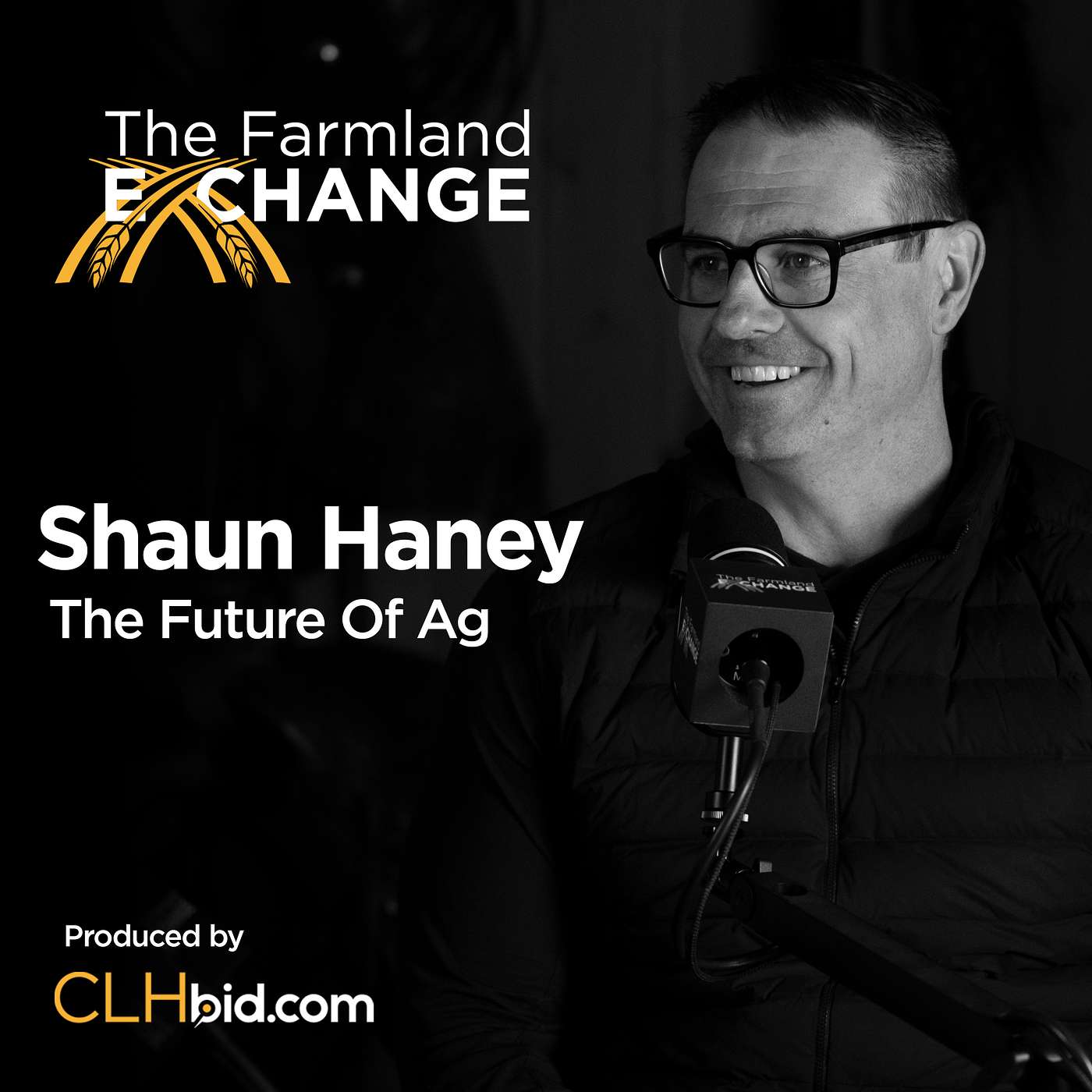
The Future Of Ag feat. Shaun Haney (RealAgriculture)
Welcome And Guest Introduction
Devon DavidsonThe Farmland Exchange, the official podcast of chbid.com. Expert insights on buying and selling farmland in Western Canada. Welcome back to the Farmland Exchange, the official podcast of chlhbid.com, where we provide you with expert insights into the process of buying and selling farmland here in Western Canada. I'm Devon Davidson, your host and digital media strategist for CLHBid.com. If you haven't already, please take a moment to like, rate, and review the podcast on your preferred platform. It helps us out and we greatly appreciate it. On today's episode, we're going to be talking about the future of agriculture. And to help us with that conversation, we've got a special guest. He is one of the most recognizable voices in Canadian agriculture media. You're probably aware of him. He is the founder and host of Real Agriculture and the daily radio show and podcast Real Ag Radio. Here with us today is Shaun Haney. Shaun, thanks for joining us. Thanks for having me. This is uh pretty cool. This is a nicer studio than I have. You know, we we've got some people that have put some time into it for sure. Yeah, it's uh it's pretty neat. Um and before I get too far into the discussion, I just want to introduce as well uh Ryan Lang, our COO of uh CLHbid.com. So, Ryan, thanks for being here too.
Ryan LangYou bet always exciting to uh be a part when we have a special guest on.
Devon DavidsonOf course, yeah. We've had a few occasions like this. So yeah, Shaun, thank you. We uh we know you're up in the peace country here for um an event at uh Evergreen Park today.
Shaun HaneyYeah, speaking to uh a group of young farmers, farmers under the age of 40, about what some of the challenges are, what are some of the the things that I think they need to be aware of? Is they you know really make the decision, do I want to, you know, is do I is this the farm I want to come back to lead?
Devon DavidsonYeah.
Shaun HaneyRight? Instead of it just sort of being a default, it's okay, is this actually the the right decision for me and my and my family? And uh, you know, continuing on the family legacy.
Shaun Haney And RealAgriculture Origins
Devon DavidsonWell, very topical and relevant for what we're gonna talk about today, and that's the future of agriculture and kind of how it came about for us, Ryan. I think was that uh there's a lot of negativity or pessimism in the market right now, just a lot of uncertainty, right? And we can talk about that a little bit later, but um, before we get into that, I just want to talk about your background and and sort of realag and how that all started. So I I understand you you were raised on a grain farm in the Lethbridge area.
Shaun HaneyYeah, it was a seed, it was a seed farm, and it was also uh we had a feed yard. Okay, yeah. So uh we were a pretty diverse operation.
Devon DavidsonYep.
Shaun HaneyUm the family settled there in 1927. Uh the irrigation project in the area brought them up from Montana.
Speaker 3Yep.
Shaun HaneyAnd uh settled in southern Alberta. And in 1937, uh my grandfather came back from old school and said, Hey, we gotta be in the seed business. Nice. And so uh they ended up you know building a feed yard there and a and a bin site. And uh we had that operation until 2019.
Devon DavidsonOkay, excellent. I'm actually I was born in Lethbridge, so we have uh yeah, yeah. And my mom did tell me a story one time too. I think her side of the family raised horses in Montana and came up to Alberta at some point too. So a little bit of similarity. I think there's lots of back and forth. Yeah, for sure. Well, I just wanted to ask about your background a little bit. Um, obviously very diverse. You've done a lot of interesting things over your time. How did real agriculture begin and and what originally pushed you towards the media side of things?
Shaun HaneyYeah, so I wanted to be, you know, growing up, I was a pretty unmechanically inclined farm kid, to be honest with you. Uh I always say to audiences that uh I will put my unmechanically inclined skills up against anybody because I think I'm the top one in the nation. Uh even challenge some of our American audience. Uh so but it was interesting the fact that I really didn't have any aspirations to come back to the farm. I actually wanted to go to law school. I wanted to be an intellectual property lawyer.
Devon DavidsonInteresting.
Shaun HaneyAnd so, but life happens, and all of a sudden my wife and I, we have a, you know, I'm I'm back at the farm. I'm supposed to be studying for the LSAT, uh, not doing a very good job of studying, you know, I'm a bit of a procrastinator, don't have a deadline, don't have a test book, all that kind of stuff. And uh all of a sudden you're there two years later and we have a child, and it's like, I guess that's what we're doing.
Devon DavidsonRight.
Shaun HaneySo I was really interested in the business of farming and more of the corporate side of it. And so just kind of locked in and I was running our seed business and having a really, really enjoyed it. Yep. Um, but I really had aspirations to be a sports broadcaster. That was really what I wanted to do. Any any young, I would say, you know, at that time was more males. Now we see a lot more females in sports broadcasting. But I think for any young broadcaster, that's typically where they're like, you know, who grows up and says I want to be a farm broadcaster? Not very many. It's sports broadcasts. We'll most, if you talk to most farm broadcasters, they'll tell you, eh, they they kind of started in the sports, they realized I needed a uh, you know, an actual steady paying job.
Devon DavidsonYes.
Shaun HaneyUm, so you know, when I was in grade, I think about 11 or 10, I had asked uh my my parents had actually sat me down and said, Hey, what do you want to do with the rest of your life? Everything's objective based on our family. And uh I said, Well, I want one of these sports broadcasters, you know like Peter Maher doing the Flames games, that'd be fantastic. I would love that love sports, love, love talking. And uh they said, uh my mom's like entertaining it and she's going on. But by the way, my parents do not remember this happening, so uh I do. And uh what happened was is that uh my mom's entertaining it. She's like, Where'd you go to school? She's showing interest, and my dad finally, after about two minutes of listening to me, uh yet her on. He said, So what you're really saying is you want us to support you the rest of your life. Um, I was like, Wow, dream killed. Yeah, yeah, just hard stop there. Exactly. So it kind of moved up, but it was. I'm glad I didn't go into sports broadcasting. It is a tough business. It would be. It is it's actually brutal uh in terms of the amount of jobs, real paying jobs that are actually out there. Yeah, um, so in 2008, uh Twitter and YouTube kind of took off. I was at the farm at the time, yep, and just started moonlighting, creating a bunch of content for farmers, started going to farm shows with a video camera, a camcorder, essentially like a little you know, handheld. Wow, and you're doing some point-and-shoot kind of interviews. Yep. And that's how it kind of got rolling. Started sending out an email to 300 people that are my contact list. Yep. Um, I had grown up in the seed business, so I knew a lot of seed companies, and so I talked to them about advertising, and so the monetization naturally happened that way, and here we are today.
Devon DavidsonSo, did you recognize early on there was a bit of a gap between traditional media and digital media? Or is it just something that interested you, the digital side, more so?
Shaun HaneySo I would say is, you know, well, it's a lower barrier to entry for for sure. I, you know, I I found I I wouldn't say I identified it that way right off the hop. I think it was just interesting to me. Yep. I liked the form of the content. There was actually a tech journalist uh named Robert uh Scoble, who's still out there doing stuff. He had this website called Scobolizer, and he would go to uh tech events like CES and he would go booth to booth and talk to people. Hey, you know, what are you hearing? What are you talking about? What's your product? And I was like, huh, I could do that in farming. And so I sort of emulated it, and that's how I kind of got ripping. And I found out very quickly that there was a place for it. Yeah. Um, and I and I think initially it was maybe not taken serious by some of the more mainstream outlets, but I think we've sort of proven ourselves from a one where this isn't just sort of uh I think that's gonna be here today and my attention moves somewhere else tomorrow. Yeah, there's some longevity to it, and the audience has come through and really shown itself to be interested in our formal content.
Devon DavidsonYeah, I would say Ryan, are you seeing that too in the industry? Like it's just moving away from that traditional media.
Ryan LangI mean, yeah, every everything's moving online. Uh you know, even our business has moved online, right? Yeah, um, I mean, prior to social media and things like that, I I remember as a kid, you know, always flipping through the Western producer to to get your ag news, right? Or or maybe your hometown paper in in uh York and it was uh um Yorkton this week, you know. Um and and that's all that there was at that time. And yeah, you know, as things have progressed, I mean everything's moved online, and I'm not surprised to to see uh you know Shaun comment um you know the success he's had with real egg for sure um on media social media platforms, right? So yeah, yeah.
Devon DavidsonWell, and Shaun, you were early to podcasts. Obviously, we're doing one here today, right and video podcasts have really exploded over the last few years. Did you have any challenges? Like, was that format kind of was there a slower uptake amongst your audience with podcasts? Was it or was that accepted right away and and I think it's just a natural progression.
Shaun HaneyYou know, we were doing a lot of uh YouTube videos where you know a little um hey, let's talk about what CLH is doing, like you know, at a at a at a farm show or doing some agronomic uh educational videos and things like that. So the transition to you know podcasting uh at the time was there was lines where podcasting was more audio. Yeah, uh as it moved to more video, honestly, everything just kind of became a podcast.
Devon DavidsonYeah.
Building Ag Media For Digital Platforms
Shaun HaneyAnd so for us, it wasn't really a barrier. Uh in and it was an opportunity, I think it was just an opportunity to get our content out to more people. Um, you know, I think one of the things that we talk about a lot at real agriculture is that, you know, I think a lot of media companies or communicators get trapped in the, you know, um trying to make sure their audience meets their meets them somewhere. We believe very strongly and we we need to meet the audience wherever they are. Right. And so, which can become kind of dizzying in the sense that there's more distribution options than ever before. Yeah. Um, and so you try to pick and choose where you think there's some longevity. Um, you know, I can remember initially with Instagram, we were like, ah, I don't know. And you know, so we probably were a little bit late there. Yeah with Snapchat, we were like, I don't know. And I was glad we were like, I don't know, because it's it's kind of worked out to be not what people thought it was gonna be.
Devon DavidsonI would agree with that. So where are you finding the most successful platforms for for your audience for your platform?
Shaun HaneyYeah, so it's still our it's still our e-newsletters for sure. Like you know, just simple sending out a daily email. Uh we've got like 17,000 farmers across country that are getting some form of our daily email that is going that is going out. Uh obviously YouTube is still very critical. Uh and you know, I I don't even think of it as a social media platform. You know, when I when I talk to my kids who are in the you know the 21 to 24-year-old range, which I think is uh you know the audience of the future or now, they view YouTube as a TV channel. Yeah, it's you know, and in the US there is YouTube TV. That's right. Right. So it is it's not a social media platform. It's a it's a it's a form of video distribution that is more like a network than a social media platform. And I will also I would also still say that X still has a purpose, and definitely Instagram is is very critical as very critical as well. One of the real evolutions we've seen is we have written content, uh we have audio content, we have video content, but the video content has really been split. You know, there's long form, there's shorter form, and then there's like the super short form, which is on YouTube Shorts or Instagram reels, right? So again, it is there is lots of different forms. It's you can see the laborious side to creating so many different types of content for different people.
Devon DavidsonYeah, do you find yourself struggling with that sometimes? You kind of have to pick and choose. You only have so much time of the day and so much, so many people that can produce content for you. Do you kind of say, well, do we need another 15-second reel? Or right.
Shaun HaneyWell, I think every media company is. Yeah. Yeah. Yeah. I think the answer is yes.
Devon DavidsonAnd if you're not, you're probably not thinking about it enough. That's right. The struggle though, too, is some there's so much noise, right? Do you find that you kind of get lost in the ether sometimes?
Shaun HaneyYeah, well, I think that's as a content creator, uh, and you're our our job is to provide insight on what's happening in the world of agriculture, yeah, either with us domestically or things that are happening abroad, um, and how that works back to the farm gate. And I I I think you you really can it's a real challenge because it's a black hole. Yeah. Okay. So like it's not like you're trying to fill a paper, yeah. Where we know we have X amount of pay pages, we have X amount of characters with spaces, let's fill it. Digital is endless. It never ends. Yeah. And so it's trying to sort out what what does how are we serving our audience the best tomorrow morning in that email, or if they're a subscriber to our YouTube channel, how are we serving them the best? What do they really need to know? Yeah, or what what are they wondering about?
Devon DavidsonUm, that's really a daily challenge. Do you spend do you find yourself spending a lot of time like researching content or doing keyword research or just like looking at topics that are trending and addressing that?
Shaun HaneyUh so not doing keyword research. I I no. Uh I consume, well, at least my wife's opinion, I consume an inordinate amount of Bloomberg Radio. Okay. Uh that would be research. Uh, I'm an auditory learner, so I'm constantly listening to things. Uh, I do read a lot as well. Uh I think it's you know, I think it's one of the pressures of this job is to be as up to date as possible as we can be on the issues.
Devon DavidsonYeah.
Shaun HaneyUm, and it's that is a in today's world here in 2026, that's a big challenge. It's a big undertaking, right?
Ryan LangThat's absolutely staying relevant, I think, is key. Totally.
Devon DavidsonWell, and the volume of content. I mean, Ryan, you've probably looked through the Real Agriculture website, but there's so much to look at. There's just a uh a dearth of topics you can cover. And I actually wanted to ask you about Real Ag Radio. So that's a daily format, correct? Yeah. So what does your schedule look like on a daily basis trying to provide content every single day and on all these different platforms?
Shaun HaneyRight. So uh it's it's it is hectic. Uh, it is not very it's not as regimented as uh one would probably like it to be. If on the disc profile, I'm an I. Um if I was a C, I would have a lot of trouble with my schedule. Um it is when I when we first started Real Ag Radio on Sirius XM in 2016, so we're 10 years this year. Uh somebody had said to me, Hey, congratulations, you just bought a dairy farm. And I was like, What do you I don't get it? What do you mean? Yeah. And they said, Well, every day you got to get up and you gotta put you have a deadline, you gotta produce content. It's not as fun as it was. Like now you are you're regimented. Yeah, I was like, huh, I don't know what you're talking about. Yeah, I bought a dairy farm. Um, he was that's a very good analogy. Um, so I would say uh most mornings I am um I am probably up at my desk by 5 a.m. Probably 5 30 for sure. Yeah. Uh a lot of the morning is listening and reading things. Uh it's you know, and it's the just the I'm also the CEO of the company, so I've got you know those kind of responsibilities.
Devon DavidsonYep.
Daily Show Workflow And Content Team
Shaun HaneyI we we don't do the show live as much as I would like to. We used to do it live a lot more. I actually enjoy live more so than recorded.
Devon DavidsonRight.
Shaun HaneyUm, but uh that's a me thing. Everybody doesn't agree with me on that, um, especially the fill-in hosts. But um I I we have the show done by about noon mountain. Okay. Yeah. So I would say like the actual recording of it is about an hour and a half in in kind of time putting it together uh on a daily basis, but there's probably an hour and a half to two and a half that is in more of like the prep.
Devon DavidsonRight.
Shaun HaneyBut the prep is not like, at least how I view it, it's not like now I'm prepping for the show. The prep is like this continual. Yes, there's you know, there's things that I will listen to tonight waiting at the airport that could be for next week. It's not like, hey, here's the guest, let's do a bunch of research. Yeah, everything, you know, a lot most times I don't have my my questions are generated by based on what the person says. Right. Not necessarily and and relying on that accumulation of research over the the previous week. You're just immersed in the topic. Yes, yes. Yeah, that's the best way to put it. Yeah, exactly. Much shorter answer than mine. That's good. But it's it's interesting because you know, a lot of times in the content creation business, you you really don't know what's gonna do well. Right. And so there is there is like a volume side to this equation where it's not like you know, there's lots of times where I'm super excited, great, oh big time guest. This is gonna be awesome.
Devon DavidsonYeah.
Shaun HaneyUh, or I think this is a really interesting topic, and you're like, huh, no one cared. Right. Yes. And then it's like a little off-handed like column you write that took about 10 minutes, or maybe it's like some interview that got thrown in because somebody sent you a press release and it like boom, and it just takes off. You're just like, this is I doesn't make sense. Have not figured out this game quite yet.
Ryan LangI think we can relate to that too, Devon. I mean, the stuff we do that you know you think is gonna go rock star and relate very well to people, it's like ends up being a flop, and the stuff you least expect to relate to people, it you know, there's a lot of interest and engagement from your audience.
Devon DavidsonYeah, we struggle with that too, no question. Yeah, yeah. Like I think all content creators do. Yeah. How many people do you have on staff now? Because obviously. Multiple hosts or fill-in hosts, I guess as you called them.
Shaun HaneyYeah, so we about half that group is uh editorial or is in in field, you know, in content creation. Uh the other half is either in administration, sales, web dev, things like that. So um, you know, I've I've had uh we've had great success in um finding people to be a part of this this journey. Uh, you know, Lindsay Smith, who's in Ottawa, does a fantastic job. You know, she came in as a writer uh and has turned into uh a fantastic broadcaster. Uh Kelvin Hepner's in Altona. Uh he came from actually the radio side and uh does a lot of our news stuff. Amber Amber Bell is in uh Westlock, Alberta, actually. She's relatively new to our team. And then uh Byrne Tobin and Peter Johnson are also in Ontario. So it's it's a it's a great group. Um and it's it's trying to be as one of, I think on brand for us is very being very connected to the farmer.
Devon DavidsonYeah.
Shaun HaneyUm the majority of our content team farms themselves. Kelvin has a poultry operation, bro, broiler breeders. Uh Lindsay's in the sheep business in Ontario. Uh Byrne grew up at a dairy farm in in Newfoundland. Yes, there are dairy farms in Newfoundland. I grew up in the seed business and the beef industry, and uh Amber's worked a lot in the regenerative side. So it's it's it's um that being connected to the actual primary side of the industry, yeah, I think really allows us to create more content that's relative to the audience that we're targeting.
Devon DavidsonI would agree. And I think not unlike CLH bid, right, Ryan, where almost everyone on staff has some connection to the farming business.
Ryan LangAbsolutely. I mean, yeah, we're we all come from a farming background or we touch the farm in in a certain way. And and like uh Shaun alluded to, you know, having people who are key and and integral really make your your business what it is, right?
Devon DavidsonAnd and understand the sellers and what they're going through when they're preparing to sell a farm, right? We kind of um I did want to ask you, you so you've done hundreds or thousands of interviews over your time. Is there is there one or two that's kind of stuck out to you? I see you've spoken to a lot of people, you alluded to it earlier. Uh, you know, this is gonna be a big interview. Was there one that stuck out to you?
Shaun HaneyOh, uh from a Canadian perspective. Um I was on a podcast in the US and they asked me this question, and I totally flopped. Uh but I because I have a Canadian answer, um, which is Rick Mercer. Okay, nice. So yeah, that would flop in the US. But yeah, they had no clue who he was. Um and I well, I didn't even suggest it because but it Rick Rick Mercer was great. Uh I I the sometimes we get to when we uh we are like an official media partner with a conference, we get to interview somebody that we don't typically, you know. Why would I I was gonna ask how did Rick Mercer come about? He was the after dinner speaker at Farm Tech one year.
Devon DavidsonOkay, got it.
Shaun HaneyAnd so we had built a uh on set studio or on the show floor studio, and so part of his speaking contract was to do an interview with us. And I I'll be honest, a lot of some celebrities are they suck, like they're they they're contractually obligated to have a conversation. Right you can tell very quickly, uh, I don't want to do this, yeah, but I'm going, and some of them don't even put on a good face, they're just like generally a pain in the ass.
Devon DavidsonYeah.
Shaun HaneyUh Rick was the exact opposite end of that pendulum. He came in, he had more questions, like, what are we doing here? This is so cool. Like, what who's the audience? Like, that's great. He was just genuinely fun. Yeah. Uh and I actually remember we had done the interview, we had stopped, and then he uh the handlers had to come get him like, hey Rick, you gotta go on the stage.
Ryan LangTime to go.
Shaun HaneyHe was great. Terry O'Reilly from CVC. Oh, same thing. He he was gonna miss a flight because we couldn't get him out of our booth. Uh I was like, Terry, I think you gotta go. I whatever. They'll come get me when they need me. Like he was he was a lot of fun. Uh but there has been yeah, uh, some of them aren't very good. There, it's it's sort of like uh, you know, I'm on TV, you know. That's too bad. It's kind of like you don't want to meet your heroes ever, right? Because you might get let down. That's right. Yes. There's like you you you look up to an NHL player and it's like, well, that was disappointing. I wish I never would have gone through that experience. Totally. And and sometimes you're like blown away at what an awesome person they are. So yeah, it's you know, I've had experiences. I I I feel incredibly fortunate when you're at a farm show in Canada or the US, and somebody walks up and says, Hey, I lit, you know, I I I listen to the to real lag radio on Sirius, or I enjoy your guys's, you know, schools that you do. Uh, I really appreciate it.
Devon DavidsonYeah.
Shaun HaneyUm, I I have all the time in the world for those people because that's the audience. Yeah. Um, I've had my own experiences on airplanes sitting beside somebody that's, you know, a big sports host, and you're like, okay, they're kind of a jerk. That that like that that wasn't a great experience. That was a letdown for that. That was a bit of a letdown. And I wasn't even being Uber fan. I was just saying, hey, I like your bag.
Devon DavidsonYeah. Right? And yeah, like, leave me alone, please. I'm yeah.
Ryan LangDefinitely gives you some sense of validation that what you're doing is, you know, serving a purpose or potentially helping people with well, I had uh, I was in Saskatoon at the Besborough, uh, in the elevator, and it was I was there uh speaking at an event.
Shaun HaneyAnd there's a farmer, uh, a rancher that's in the elevator with me that was there for something entirely different. And he looks at me and he says, uh, hey, are you Ishawn Haney? I said, Yeah, I am. Yeah. He's like, Oh, I listen to Real Lag Radio all the time. And I was like, Oh, I appreciate that. That's very nice of you. Thanks. And he says, Uh, I just want to let you know you say so. This is like from going from the fifth floor to the lobby. You saved my life. And then the door is open. No way. To go to the lobby. I'm like, oh, okay, well, let's go in the lobby and like let's have how exactly did I save your life? And again, you know, this is like an example of where you try to make a difference, yeah, and then sometimes you don't realize how you've made the difference. So he's like, you know, you used to do this, and I you don't do it as much anymore. You used to do this Fit Farmer podcast hosted by Jerry Gary Chambers, of who's a farmer from Drum Heller. Okay. And uh Gary's like an Uber athlete, like he teaches like Olympic. Cross-country skiers, like he's he's different uh from an athletic standpoint. And uh by listening to this podcast, the the the guy got uh he was a farmer from around Brandon or a rancher. He said it was like an inspiration for me to start to join CrossFit. Okay, and I like got healthy and like honestly, like my blood, my cholesterol was out of control and all this kind of stuff. And it's like by listening to that podcast, I kind of got inspired. I'm like, that's pretty cool. Yeah, that's awesome. Because a lot of times it's like, hey, I grow better crops, or like I improve my farm management. Yeah, yeah. This is like a little, you know, personal health's a little bit uh a little bit of a different category.
Devon DavidsonThat's gotta be rewarding for you and just a little more fuel to keep doing what you're doing.
Shaun HaneyYou love hearing those stories from people.
Devon DavidsonOh, totally.
Shaun HaneyYeah. I also do get the, you know, you're a yeah, I don't I disagree and people say bad stuff, but of course that also happens too. At least people are listening.
Devon DavidsonYeah, I you and I had a conversation once. I used to run my own podcast, it was a hockey podcast, and um I got plenty of negative feedback, right? But I also got a lot of positive feedback, and that kind of keeps you wanting to do more.
Shaun HaneyYou develop a thin skin pretty quickly. Yeah, yeah. And and there's different levels. Like, so uh I get some emails frequently where you know it's somebody that I really respect. Yeah. And if they're critical, uh that carries a little bit more weight. Sure it does. Um, than if you know somebody that I have no clue who they are, or it's like, you know, hot ass at hotmail.com or something like that. Sure, yeah.
Interviews That Surprised And Mattered
Devon DavidsonYeah. All right. I think we wanted to just shift gears a little bit. Unless Ryan, is there anything else you want to ask uh Shaun about his background or real egg?
Shaun HaneyNo, I I think he did a great job covering it, yeah. All right.
Devon DavidsonUh we want to move to the kind of the state of the mind of Canadian farmers and just talking about what the mood is right now. And so um, has has the tone of those conversations you've had with farmers and with policymakers and economists and agronomists has that changed at all recently?
Shaun HaneyUh in in the context of like the future of the industry or the future of the industry.
Devon DavidsonWell, I guess how things are now, if whether they should be optimistic or there's more reason for pessimism or um, maybe an outlook on ag in general.
Shaun HaneyMaybe looking into this year, like uh well, I think there's a lot of concern. Um it doesn't matter where you go in Canada or the United States, there is a lot of concern about farm profitability on the cropping side. Yeah. Now on the beef side, it's a whole different equation. It's you know been generational profits. There's a whole bunch of things that have lined up to make uh you know the beef sector pretty profitable in 25 and and likely to be, especially at the ranch level, in 26. I I think you know, if you look at you know, our we have our market research arm real aggregate studies. Uh, we asked farmers in January about, you know, how do you perceive risk coming into this year? And 75% of them said 2026 is gonna be riskier than 25. Well, that is working out to be that was good fortune telling. The farmers uh looked into their crystal ball balls appropriately, yeah, because that's kind of how it's worked out. I don't think anybody really had a war in Iran on their bingo card, but it's really thrown diesel prices and fertilizer prices really kind of for a loop, and not just the price side of the equation, but on urea, it's also being able to get it, uh depending on where you are geographically, yes, is gonna be a bit of a an issue. So I think there is concern out there uh for sure on the fact that when I when a lot of farmers pencil out, and in especially on the variable cost side, but also including some of the fixed costs, this is turning out to be a very challenging, profitable year, uh for sure. Now, having said that, Western Canada, I think, is is not as much of a concern as if you were farming in Arkansas or Mississippi, because if you look at what's happening in the U.S. in the southern belt, some of those southern crops like rice, cotton, sugar, sorghum, they're much poorer. Like the average cotton grower is gonna lose about $380 an acre this year. Oh, geez. Uh, forecast by USDA. That's canola looks a lot better than that. So, relatively speaking, you know, we're we should also remember the kind of the situation we're we're in. That's right. It's weak, but it could it definitely could be worse. The question is you've identified the risk. What are you doing to deal with it, mitigate it to make sure that you're here in 2027? That's the question I think that we don't talk about enough.
Ryan LangInteresting. Absolutely. You know, I I'd even comment, you know, we we do a lot of egg shows and things like that. We were just down in Brandon here not too long ago.
Devon DavidsonYeah.
Shaun HaneyAnd you know, for all the noise that's out there currently, um, and and and a lot of the political issues and things like that, there's still a lot of guys that come up to us and and ask, you know, hey, do you have land for sale here? We're looking to buy, or we're still looking to expand. So I mean, there is still optimism. Of course, there's you know, certain farmers who are in a position to uh to make uh movements like that. And then there's I mean on the opposite side of the equation, there's guys who are also over leveraged too. And right, so yeah, it's there they're like it's not a homogeneous group, yeah. Right. And we and we see this in a lot of our market research, how younger farmers see it versus older farmers, larger farmers versus smaller farmers. Um, and sometimes things make sense and sometimes they they they really don't. Um that's why we we try to also do some some profiling in terms of like, okay, no matter what your age or your farm size, are you are you maintaining trying to grow? Or are you like in like thinking about selling here? You know, you're in shutdown mode um in the short term. And I think that also provides some interesting perspectives too. Um, I I you know, I I think overall we do need to increase our game when it comes to some of the financial competencies. So we're at we're making the right financial decisions because some of those people want to expand, and maybe because they're just trying to get to some sort of ideological, like, you know, we're at 7,000 acres. It'd sure be nice to be at 10. Sure. Yeah. Why? Well, why would it be better to be at 10? Yeah. Well, because it's a good number, it's a nice number. Good numbers. Sure. Right. And so we need to get past that kind of decision making and get more to like, actually, you know what? We need to get to 10,000 acres because we've got that, that's kind of what we're set up from a combine perspective. So we're lowering our fixed costs per acre by getting to that farm size. That's the kind of more of the things we need to be chatting about.
Devon DavidsonAbsolutely.
Speaker 2Yeah.
Devon DavidsonSo you're speaking to young farmers this afternoon. I'm wondering if you can take us down the rabbit hole a little bit. Are you seeing some generational differences in how they per how you know their outlook for this year?
Shaun HaneyYeah, so they are they feel better about their current farm financial status for sure. Okay. Um, they also uh young farmers under the age of 35. Uh, so on let's just start with that. So uh they feel better about their farm's financial situation relative to 12 months ago than the rest of the age groups. Some people would say though, they're likely the generation that's most really left out of what's going on financially at the farm. So it's a perception of we're doing better better than we are. Right. Um, you know, it Justin Funker, my market research partner, has a lot of data to show when somebody comes back to the farm, one of the very first things that gets passed off in terms of the operational side is what are we seeding? How are we fertilizing and how are we killing the weeds? It's those variable cost kind of decisions. Right. Mum and dad, maybe you're like, yeah, we're, you know, go to it. And and relatively speaking, how bad can you screw it up? Right really. Like as long as there's supervision. But whether we seed variety A or variety B, probably not that big of a decision to be made.
Devon DavidsonRight.
Shaun HaneyUh and this is something that came from the seed business. You there's a lot of good varieties out there.
Devon DavidsonYeah.
Shaun HaneyUm, what the very last responsibility that's passed off is anything to do with finance and accounting. Now it's not just passed off in terms of responsibility, it's also exposure. And so we have a lot of farmers, I would say under the age of 40 for sure, that are coming back to this business. They've started families, this is gonna be great, and they don't even know what they're coming back to because they're really not shown. They don't, they don't go to the meeting with the account, they don't, they don't have the discussion with the banker, and they're sort of like in kind of like they're running blind a little. Ignorance is blessed sometimes, yeah. A little a little bit. And so I I the I incur one of my messages to the young farmers today is gonna be like, get in the room.
Devon DavidsonYeah.
Shaun HaneySo I I grew up at a farm where my dad, I think, was really ahead of this, uh, in terms of like I can remember being like 17, 18, not even sure if I'm interested in the farm. Yeah, but he was dragging me into meetings with the banker and with the accountant, and it was basically like just you're gonna sit there, you're gonna shut up. And I want just no, you do not ask a question. You just sit there and right, you shut up. And but I want you to hear the discussion. Yeah, I want you to understand what my questions are, what the challenges are. Yeah, if you have questions, that's for the truck. Afterward, yeah. Afterwards, yeah, and I think that's we need to have more of that. Getting younger people into the room quicker. It doesn't mean they make the financial decisions, but being exposed to it, just like we expose them to the agronomy or the or the or the livestock production or very early. Like they're like 10 years old and we're taking them out. Hey, let's go check the cows. We need to get, hey, let's go talk to the accountant.
Ryan LangYeah, why do you think that there's that that uh that void there? Is it just awareness or you're if you talk about money?
Shaun HaneyYeah, it's it's money, it's it's uncomfortable, right?
Ryan LangSo I mean, mom and dad, they've always had the financial reins, and and they still like they yeah, they need to be in control. They're not ready to pull back the curtain yet.
Farm Mood And 2026 Risk Factors
Shaun HaneyIt's a need to know until it's a need to know. That's right. That that I I it I think it has to do with the fact it's just family businesses in general, not just in agriculture, family businesses in general don't talk about money well. Yeah, yeah. It's it's an uncomfortable subject. It's taboo. That's why a lot of you know, I yeah, that's why a lot of family farm successions don't go well, is because everyone's fearful of having the discussion, right? We the average age of the farmer can or who holds the asset continues to increase. Um, and the younger generation wants to have the conversation. They're being told to have the conversation, but they know if I bring this up, the potential relationship consequences of just asking these questions are so bad, I'm better off just to sit here in the dark. Yeah.
Devon DavidsonWell, it's funny because I know you know Jesse Meyer, and he's been on our show. And and that was one of the things he talked about quite a bit was my dad brought me in on everything. And you know, and whether it was not to provide input, but it was just to sit there and have exposure to it and to listen and to understand it better. Absolutely. And that's worked out really well for Jesse.
Shaun HaneyYeah, absolutely. So I I I think uh also in our on our day, we see younger farmers are they are more optimistic, but they've got more runway, they're more willing to invest in capital. Yes, they're more willing to grow. Um, they they also like less um less support for some like government support programs. Um we did some research on that. Uh so they're they're kind of unique, but the question is like, okay, so and you think about it from a a lot of times they get tagged with, oh, these young farmers are not very loyal. And one of the things that Justin and I have found is that um they do they stay that way or do they morph into what the older generation has always been with all of these different topics? Like I believe that when I was like under 30, but now that I'm 45 and I have more experience and perspective, do I kind of act a little bit more like my parents did? I'm not as a different thinker as I thought I was. That that's the thing that I I find very fascinating about small business.
Devon DavidsonThat might just be a maturity thing, too. It's right, you know, understanding, oh, I I didn't understand that, now I do.
Shaun HaneyYeah. But but overall, Canadian farmers, if you look at our Canadian farmer sentiment index, they are they're quite negative right now on the next the opportunity next 12 months, in the next 60 months. Um and and the U.S. farmer, if you use some of the comparable questions that Purdue, uh the CME uh egg barometer does, US farmers are a lot more optimistic. Um I think that has to do a lot with the political affiliations. Right. We have a Republican in the White House, we have a liberal government. And so I think if uh, because we had asked those questions going into the Canadian election, and it showed there'd be a bump in the outlook of the industry if there was a government change. I would believe that. Reality or perception, that's just how it was, yeah.
Devon DavidsonFor sure. Uh, you know, you attend a lot of trade shows, right, throughout North America. What are some of the trending topics? Like, is it farm succession? Is it interest rates? Is it commodity prices? Is it input costs? Like, what are you what are you guys talking about more often than not?
Shaun HaneyIt's all of the above. Yeah.
Devon DavidsonYeah. It's it's it's uh there's not one trending topic that comes up.
Shaun HaneyNo, I think right now there's a lot of people that you know you go to a lot of conferences, there's always somebody speaking about AI. Yeah. Yeah. Yeah. For for for sure. Uh a lot of people are interested in, you know, from a technology standpoint, are very interested in drone spraying. Okay. Uh that's can it's kind of controversial topic in some of the the weed science uh community for for sure. Um, and then of course, like the standard stuff. The markets is the market going up and down, what's going on with you know, the you know, we in October we asked, what are your main concerns for your operation? And it's like the it's the same thing in 2026 as it would be in 2036. I'm concerned about commodity prices, input prices, and government policy. Yeah. That never ever changes. It is pretty consistent. And it there's just, you know, right now, and you know, you look at some of the geopolitical issues, there's probably a little bit more concerned about some of the geopolitics and people trying to figure out why is something way over there impacting me way over here. Right. Right. And trying to shed some light there.
Devon DavidsonAnd that's kind of our job to sort of pierce through some of that. So we just covered a lot of different things and a lot of reasons for pessimism, but let's maybe flip the script a little bit. What are some of the reasons for optimism right now and the outlook? You know, we're looking at maybe global protein demand demand, right? We're talking about the beef industry and how well that's doing. Um, but what else in agriculture is really positive right now that should have people feeling better about well, land prices.
Shaun HaneyUh it's been a you know, land has been a great place to invest your money. Um, you know, outside of uh Bitcoin the last 10 years, I'm not sure if there's a better place to put your money. Um that so and that has really uh given some financial stability to the industry. One, for people to exit, and two for the people acquiring, knowing that there is some some you know uh price growth that is, I wouldn't say locked in, but high probability. Uh one of the quite the concerns in the short term there is you know, we've been accelerating at a or we're increasing at a decelerated rate. Um, a lot of the farm balance sheet is in land value, so that's something that we're watching very closely. But you know, I I think overall uh people see a lot of optimism when it comes to not making more farmland unless you're living in Brazil is is is a way to look at it. But I also think that there's uh if you're in growth mode and your balance sheet's in good shape, you've got lots of great you know, working capital, there is gonna be a lot of opportunity for for acre purchases, I think, on to expand your farm because the average age and the amount of assets that are gonna potentially turn over here uh in in the next 10, 15 years is quite I I I really wonder if there's enough farmers that are wanting to take on that that that asset load. Like it is we're talking substantial. We're not and we're not talking about like it's one thing if like a thousand acres comes available here or two thousand acres. We're we're talking about like somebody could be selling 20,000 acres.
Speaker 3Yeah.
Shaun HaneyAnd so who is going? Where's that demand gonna come from?
Ryan LangAnd I guess another question is you know, I've I've heard this on some other podcasts where it's been discussed, you know, this next generation that's coming up, 30 to 40 year olds, do they want to manage 10,000 acres? Or do they, you know, are they more comfortable managing, say, 4,000? You know, it it's a it's a heavy workload. And I mean, you've got farm labor, you're looking after hands, yeah. Um, the numbers are that much bigger, the risk is that much bigger, right? So um it'll be interesting to see, you know, in the next say 10 years, you know, our our my generation, I'm I'm I'm in that generation. Do they want to manage those 10,000 acre farms plus?
Shaun HaneyRight. And and what is what becomes the middle, right? So, you know, in in our family operation, we had about an 8,500 head feed yard. At a time that was a good size finishing yard. Now you're barely a background or yard. Like we it would, it's it we were in the middle, but now we would be be considered like use it the things can shift.
Speaker 3Yeah.
Shaun HaneyAnd so uh for the Western Canadian prairies, is that 10,000 acre farm are they caught in the mushy middle years from now where you either have to be 50 plus or you need to be like five, five to eight as a one-man band, right? Using all the technology and the autonomy and the robotics and all these, and like a lot of people talk about uh some of the the future technology, like it advanced, like they always think about it from a big farm standpoint. But if we look at it, autonomy and some of the robotics stuff and sensors, it it it really fits well with the smaller farms just as much where all of a sudden that that that that family unit, that husband, wife, and maybe a kid farming together or whatever it looks like, all of a sudden they have a lot more scale than they used to. Yeah, and so I I I really think it it helps people downstream do you see it trending that way?
Devon DavidsonBecause I know that's been a topic of conversation for a long time. I I worked for a dealership and and you know autonomous tractors was always a big buzzword, and yeah, but it hasn't really come to fruition yet. No, but yet that application for a small farm could have huge implications, right? Huge, yeah.
Shaun HaneyI think it gets here.
Devon DavidsonOkay.
Shaun HaneyI I have never been a believer in the I'm going to buy a 600 horsepower tractor that doesn't have a cab. Yeah. I I I I see more of a retrofit to a unit that we currently have, or I I I think I'm a little bit more of a believer in more of the swarm kind of technologies. We'll sh we'll see how it all it probably there's multiple ways to do it.
Ryan LangI think there will always always be hesitancy when you know when new technology gets introduced until it kind of people get familiar and it's you know adopted and proven, right? Yeah. Before it really takes off.
Shaun HaneyWell, and it I I think for you're talking about how some of the some some of the younger farmers, how they view things now, and do I really want to manage all those acres? Also, if we're more in tune with my based on your equipment load or your access to labor, what is the right farm size? And so some of those people, I I have a good friend that he downsized his farm like 50%, and he's way more profitable with 50% less acres than he was when he was like, you know, oh man, look how that guy's expanding. If we our if our KPIs for farm success are number of head feet on feed, or uh how many acres do you farm? What's the very first question? You could have a hundred farmers come through here, and the very first question they would ask each other is, Oh, how many acres do you farm?
Devon DavidsonYeah.
Young Farmers And Financial Blind Spots
Shaun HaneyNot like, hey, what's your return on investment, or you know, how profitable were you last year? It's always the same thing. How many acres? Our KPIs are mixed up. And so I think as that evolves and that changes, what we deem to be a successful
Devon Davidsonfarm also kind of changes. Interesting. Yeah.
Ryan LangNo, I I I mean, I've talked to it about my dad. It's it's you know, the two to three thousand acre guys, I mean, they make a good go at it. Yeah, um, they're sized, right? They have the equipment that's you know fit for purpose. Um, you know, when you get start talking 10,000 plus, it's like, how do these mega farms, you know, make a go for it? Um, you know, beyond, you know, say 50 years out. Is that a sustainable model? I don't know.
Shaun HaneyWell, and even 10,000 is not even like there, you know, you think about Saskatchewan, how many farms are over 30? Yeah, no, exactly.
Devon DavidsonIt's it's yeah, and that's probably a trend that continues, do you think? Consolidation and just fewer farmers, larger farms, like is that kind of where definitely fewer farms?
Shaun HaneyYeah, um that that is a real tough one. I don't know how we avoid that. Uh, I think you know, you look in any industry, consolidation happens. Right. It happens in the auction business, it happens in the equipment business, it's happening right now in the railroad industry. Yeah. Uh egg retail, why wouldn't it happen at the farm level? Um, now the challenge again back to mixed up KPIs. If our key performance indicators for the success of the industry from government is how many farmers do we have? Because you'll hear this all oh, last year we lost a thousand farmers in the province. Oh, oh, okay. Like what were what did the what did those operations look like?
Speaker 3Yeah.
Shaun HaneyRight. If they were each farming two acres, we'd like we didn't miss a whole lot there, did we? Right. But if it's you know, if it was uh like I I think the context really does matter, but right now governments in Canada and the US success is how many farmers do we have? And so they're setting themselves up to fail where they're gonna be deeming the industry is not healthy because people are leaving the industry, and entry is so hard. Like, yeah, how how if if we said, you know what, let's go farming, right? The first question would be where the heck is all the money gonna come from to buy the equipment? Never mind the land, we can rent the land, but what how how are we handling the equipment equation?
Ryan LangOh, I know exactly. Yeah, it's I don't think there's an easy answer to that. Um and I I don't think anyone really knows. I mean, how is a young guy supposed to get started? I I don't think that happens anymore. I can't even think of one's you know, one story unless you've been gifted land or something like that, right? Yeah, um, but outside of that, I think so.
Shaun HaneyI I think to that is for people entering, or if you if you feel you're on the smaller side, like the straight efficiency scale, that model doesn't work for everybody. And so if you if if you are either entering or you're currently running a farm that maybe you are that 7,500 acre one man band. Um, and if you're Ontario, maybe it's like your farm in 640 acres of corn and beans, depending on where you are. Um, you I think we have to be also more open to finding different business models. Um, I I think that's you know, I I think a lot of times this industry gets very judgy about how like there's you know, there's Joe, and he does stuff a little bit weird. He's kind of a different farmer. Sure. All he's doing is maybe doing some direct marketing of some lentils into the city of Saskatoon. That's right. There's ways to be off. But that's different. Yeah, so he's yeah, he's he's out to like this guy. Yeah, yeah, right.
Ryan LangOr you gotta supplement with off-farm income too to make it work, you know. Oh, yeah.
Shaun HaneyUh thank you. Another pet peeve. Is how we judge people that have off-farm income is if that is bad. Um I I I I don't see it that way. If you're in a grain farm, you finish harvest around the end of October, you don't plant until say the beginning of May. Why wouldn't you be efficient with your months? Yeah. And do, you know, there's lots of people that in Alberta for sure that work in the oil field. Yeah. Uh that, you know, that supports their farming habit. I I don't know why sometimes we look at this as if off-farm income is is a bad thing. Um, I I I don't see it that way.
Devon DavidsonIt's no different than teachers who will work in the office, you know, it's like they're they're finished school in June and now they might go do landscaping for three months or whatever. You know, they're just they're supplementing their income, they need something to do.
Shaun HaneyWell, I think we lose credibility with taxpayers if our if our thing is here, well, wait a minute, the farmer worked hard through the summer, they deserve those five months of nothing. Like what other industry gets to do that? Like, I I I don't view off-farm income as a as a negative at all.
Ryan LangLike, like my dad, I come from a first first generation farm, and you know, he supplemented with off-farm income. He was running his backhoe doing work for the RM. Yeah, or he was working for his cousin, you know, doing uh home renovations and things like that.
Devon DavidsonYeah.
Ryan LangUm so I mean, that's what he had to do to keep things going when he was starting out early on.
Shaun HaneyWell, think about how it exposes us too to other situations. You know, we we you hear a lot of times you shouldn't come back to the farm until you work for somebody else. And some people jump that step. Hey, I did. Uh, lots of people do. Uh, I think it's always a good thing to work somewhere else. And so if you have skipped that step, I think it's great exposure for you to go, whether it's running another company or it's working for somebody else, to get exposures to other ways of doing things, yeah, whether it's in the industry of agriculture or outside of it.
Devon DavidsonI've heard that a lot. Yeah. I I want to go quickly back to land prices because we we had a conversation yesterday, Ryan, about uh what some realtors are saying and the drop in pricing and and where that's headed. And um, was it Kelvin with your uh podcast that had talked about the drop in pricing potentially? Someone last year around Ag and Motion was there was a report or uh Okay, someone did a podcast, you probably heard it, was talking about a potential 60% drop in prices. So, I mean, we're seeing Ryan, we've had a really good start to 2026 here at CLH. We haven't seen that drop. Um, so again, just trying to go back to optimism and reasons for optimism. Do you see that, or is it just like a potential short-term softening of the phone?
Shaun HaneyThere's in there's like like the housing market, like days on the market, I think is an indication. Um, that's different than what pricing is. So, you know, I hear in Ontario, for example, where hey, before we never used to see any for sale signs up on land because it was sold before the sign even went up. Right. Um, it's an indication that things have have have slowed. I I I think you know, people that are predicting you know 40 or 60 percent drop, that seems somewhat extreme uh to me. Um I I'm not sure that uh if if that happens, like we have a whole nother exactly like we we now yeah, like that is like you won't talk about problems. That that is um that's a problem. Something went sideways. I don't know what the Canadian, I think I gave this data earlier. I don't know what the Canadian number is, but the the US 82% of the farm balance sheet is in farmland. And so just think about if you're doing mark to market, uh if you had a 50% drop in land value, that balance sheet, like no, I don't care how much working capital you think you have, you're you're not, you're you're a major problem with the debt that's out there. Yeah, um, so I it could it be flat? Sure. Could it go down five percent? Sure. Yeah, it doesn't it doesn't mean that disaster is here, yeah. It's probably healthy instead of having where we're doing 15 appreciation every single year. Yeah, I'm not sure that's a good thing either. Uh somewhat of a arrest is is is is probably not a terrible thing. Yeah, I'm not sure what that negative number needs to be before we have like more of a panic situation. Right. But for right now, I I don't know, a lot of farmers I talk to uh and banks, I I I don't get this vibe of the 40 to 60 lower. Okay.
Ryan LangAnd I'd echo that. And like I mentioned earlier, you know, just talking with people at egg shows, you know, coming up. You know, where's land for sale next?
Devon DavidsonYes, you know, so demand is strong.
Ryan LangI yeah, I don't really buy into that yet, you know, this doom and gloom. I I don't see it, at least from the people that I've spoken with, you know, and and I don't know if we're quite at the point there yet, just with uh farm economics that we're you know, waiting for this big earthquake to happen.
Shaun HaneyI yeah, like there is there is concern financial, like there's there is on the surface financial concerns. It's not what I would call like systemic, where we like this is a multi-year, we've got big time problems. So, like if you look at we asked farmers on a quarterly basis, you know, how would you describe your current farm financial situation? Uh last April we were 57% good to excellent. This in January we were 37. So we dropped 20 points in nine months. I that's concerning. We're in a weakened financial position. It also makes sense given what's happened where where margins are. Right. Um, but you know, if if that is five percent in a year, then yeah, we are gonna see a land pullback. But uh we're I don't think we're there yet.
Ryan LangAnd I could say that could almost be more regionally too. I mean, if you're in one of these regions where you've had back-to-back droughts, uh obviously that's gonna hurt that region more so than you know, somewhere else where you know they've got the timely rains and and things have gone well for them.
Shaun HaneySo what one thing that I wonder about is you know, a lot of same with the futures market. When the future market's going up, farmers, if you're long physical inventory and any commodity, you love the fact the funds are in. When the market goes down and they're on the short end, everybody's like, oh, why are they let these funds participate? You know, like we were very hypocritical about this uh when we're long inventory. Um, it's the same thing with farmland. And you know, a lot of people talk, you know, that's one of the things we hear from our audience. There's a strong feeling of, you know, there needs to be more restrictions on who can actually own farmland, but we also have to be careful what we wish for. Right. Because outside investment and interest in this, you know, this asset to place to put your money has provided a good return. We need to be careful what we wish for. If we're to say, you know, like no institutional investors can be involved in farmland, just like some sort of sharp criteria. We got to be careful with that because that could have downward pressure.
Devon DavidsonAbsolutely. Interesting. Uh, we're kind of coming to the end of the episode here, but I just wanted to ask, maybe on a closing note here, what's what's gonna have the greatest positive impact on agriculture moving forward? Is there one or two things you could point to?
Tech Trends And Farm Scale Debates
Shaun HaneyOh, I was speaking at an event in Ontario and somebody asked, What's your what's your final thoughts? Um something that's gonna have a positive. I I really think uh there's a lot of things that can separate farmers and types of farms from a profitability standpoint and just overall economic sustainability. I I I really try to encourage audiences, people to remain curious and to really continue to be open-minded to you know, whether it's different crops, different business opportunities, different ways to distribute the products that we're growing, uh, different methods, different viewpoints on a number of, you know, the on a wide range of things, like stay curious. Yeah. And I I I remember an interview that I did with uh Dory Jingera Boschman. She was the former deputy minister of agriculture in Manitoba. And and I had asked her, like, you know, what what's what's a what's what's a word that really describes people that separate themselves from others? And she says, be curious. Yeah. And I really think that fits, especially in a in a time where it's easy to be like, oh, I'm gonna turn off the news, or I'm not gonna listen to this, or you know, I don't, I don't agree with that person, so I'm not gonna talk to him anymore. Sure. Like, yeah, I I think we need to challenge ourselves to not fall into that trap because there's a lot of risk in the market, and I think we need to, as much more than ever, as business people, keep ourselves curious to all the different data points and synthesize it to make the best decision for our operation. Not not based on what we think the neighbor across the road, Jack, is is saying about what I'm doing. Like, yeah.
Ryan LangOh, absolutely. It's it's easy to you know put the blinders on and and you know just do things the way you've always done them because dad did it this way and and it's comfortable and you you feel safe, right? But uh sometimes you have to take steps outside of your boundaries to uh to really uh maximize things for yourself.
Shaun HaneyYeah, well, and and overall, this industry is an economic driver in Canada. Yeah. Um, you know, I I think we worry too much about sometimes how government perceives us uh and and what what effect we're trying to drive there, but we we are. Uh and you know, it's not just food on the table, it's also it's it's fuel, it's feed, it's fiber, it's all of these different things that people are producing on a on a daily basis. And so I I think that should just naturally, because of that, it should give us optimism about the future of the industry. I like that.
Devon DavidsonPerfect. Okay, I think that's gonna do it for today, guys, unless there's anything else you wanted to cover. No, I think it was no good discussion. Yeah, I appreciate the opportunity. Thanks a lot. Thanks, Shaun. I really appreciate your time. Okay, that's gonna do it for another episode of the Farmland Exchange. Thank you for tuning in. Your support is greatly appreciated. As I said at the top of the show, if you haven't already, please leave a five-star review on your preferred podcast platform. It does help us out and it's appreciated. Uh, if you have any questions or if there's topics you'd like us to cover, um please send us an email at infotclaspid.com or give us a call at 866 263 7480. Uh the same goes if you're interested in selling farmland. We'd love to have that conversation with you. That's gonna do it for now. Thanks for tuning in. I hope this has been a positive exchange for you. Take care.
Contact Us
Have comments or questions? Ready to buy or sell your farm? We’re ready to listen!
Contact us any time be emailing info@clhbid.com, using the form on this site, or reaching us on X, Facebook, and Instagram. We love to talk farm land!